
The Brand Action Gap: Knowing but not acting is costing your business
81% of leaders say brand drives advantage. Far fewer act on it. Here’s what the gap between knowing and doing costs, plus how to close it.
There’s a troubling pattern in Australian business.
In our State of Business Branding 2026 research – independent research we commissioned with 164 leaders of established businesses – 81% of business leaders recognise that branding is a key driver of competitive advantage. They understand it matters and see the value.
And yet 40% can’t clearly articulate what makes their brand meaningfully different from competitors.
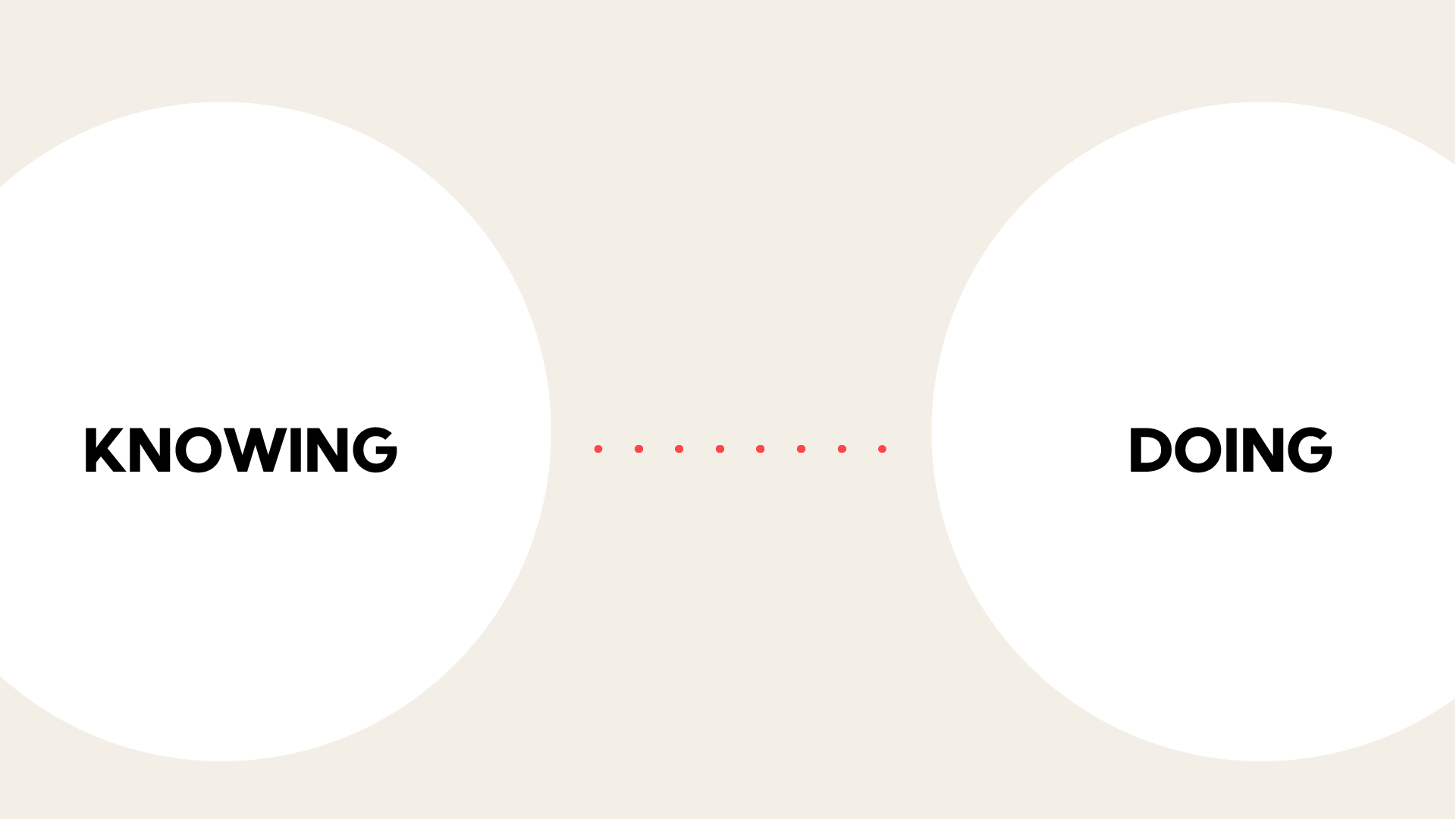
This isn’t a knowledge problem. It’s an action problem.
We call it the Brand Action Gap®. The distance between understanding brand importance and actually doing the work required to build, implement and sustain it over time.
WHAT IS THE BRAND ACTION GAP?
Leaders understand brand matters. They’ve read the articles, seen the case studies, and recognise that strong brands command premium pricing and customer loyalty.
But when it comes to real investment – strategic work, implementation, ongoing optimisation – brand work gets deferred. It feels like something that can wait until next quarter, or next year, when budgets are less tight, when there’s more capacity.
So the gap between intention and reality widens: differentiation stays unclear, customer touchpoints feel inconsistent, marketing lacks strategic coherence. It persists because treating brand as infrastructure takes discipline.
It’s easier to treat brand as a project with a finish line than as a system that needs continuous attention. It’s easier to defer strategic work in favour of tactical fixes.
THE REAL COST OF INACTION
The Brand Action Gap isn’t just conceptual. It shows up in your P&L, in lost market share, in pricing pressure, and in the increasing cost of winning clients.
You compete on price, not value
Without clear differentiation you have no leverage. Your sales conversations become about features and cost rather than value and fit. You’re forced to discount to win business because there’s nothing else compelling customers to choose you. Every deal becomes a negotiation on price rather than a decision about fit.
Your customer experience is inconsistent
Your website says one thing, sales says another, service delivers something else. Each touchpoint becomes a gamble rather than a reinforcement and trust erodes with every misaligned interaction. Customers can’t articulate why they should choose you because you haven’t given them a clear, consistent story.
You waste resources
Campaigns that don’t connect to coherent strategy. Launches that confuse rather than clarify your position. Content that adds to the noise rather than cutting through it. All of it costs money, time, and opportunity. Every marketing dollar has to work harder than it should because it’s not building for the long term.
THE REBRAND CYCLE TRAP
Here’s where it gets particularly wasteful. A business rebrands – they invest in strategy, develop a new identity, launch with fanfare, and then… everyone moves on. Guidelines sit unused. Strategy decks gather dust. Teams interpret the brand differently. Over time, coherence fades.
A few years later, someone observes the brand “feels off”. So the cycle begins again. New agency. New strategy. New identity. Significant cost. This treats brand as a project, not infrastructure. It’s the equivalent of rebuilding a house every few years instead of maintaining it.
FROM KNOWING TO DOING: HOW THE GAP CLOSES
The businesses that extract real value from brand think differently.
They understand that brand isn’t something you do once and file away. It’s the central operating system for how a business shows up, behaves and creates value.
BRAND AS INFRASTRUCTURE, NOT A PROJECT
When brand sits at the centre, it informs everything:
- Product decisions align with positioning
- Hiring reflects values and culture
- Customer experience reinforces promise
- Marketing expresses what already exists
This doesn’t mean your brand never evolves. It means evolution happens intentionally, with clear strategic rationale, rather than through neglect.
According to McKinsey, B2B companies with strong brands outperform their markets by 74% in total shareholder return. They aren’t doing radically different work. They’re doing the same foundational work, and implementing it fully. Living it across every customer touchpoint and internal process and continuously optimising.
This only works when brand is translated into something practical. Not principles that sit in a document, but a system that shapes decisions, behaviour, and experience across the business.
THE ROLE OF STRUCTURED BRAND REVIEWS
Only 29% of businesses in our research conduct structured brand reviews. The rest handle brand work reactively, based on available capacity or when something feels urgently broken.
This is backwards.
A brand audit provides something most businesses operate without: clarity on where you actually are versus where you think you are. It reveals the gap between your intended brand and the experienced brand. It shows you what’s working and what’s quietly undermining your efforts.
A proper brand audit assesses:
- your visual identity, messaging, and market positioning
- customer perception and internal alignment
- competitive differentiation
- how your brand performs across touchpoints
- inconsistencies that erode trust and opportunities that build it
The limitation of most brand audits is that they stop at expert opinion – one reviewer, looking from the outside, at a point in time. Useful, but hard to act on with confidence, and impossible to benchmark.
So we took the audit one step further and built it into a measurement system. The Brand Action Diagnostic™ includes a full external audit – then adds the two lenses an audit can’t see: how your leadership defines the brand, and how your own people experience it. The most important findings usually live in the differences between those three views. It asks three questions of every aspect of your brand – is it defined, is it lived, is it felt – and it produces a score.
That score is the part most businesses have never had: a baseline. You can’t optimise what you haven’t measured. You can’t improve what you don’t understand. Measurement is what turns brand from cyclical rebuilding into continuous improvement.
WHY BRAND OWNERSHIP MATTERS
The businesses closing the Brand Action Gap don’t just audit their brands, they assign ownership.
They appoint a brand guardian (or unofficial ‘chief brand officer’) responsible for:
- Maintaining strategic clarity
- Onboarding new team members or third parties on brand usage
- Governing implementation
- Ensuring the brand is used consistently and well
This role protects the original investment and ensures brand continues delivering value year after year.
PRACTICAL NEXT STEPS
1. Get an honest read
Most leaders have a sense that something is off with their brand but haven’t measured where the gaps actually are. Before any strategic work, you can get a snapshot of where you stand using our Brand Action Self-Assessment.
2. Check whether your leadership team is aligned
One common source of brand inconsistency is everyone in the business telling a different version of who you are and where you’re headed. A simple test: ask three of your senior leaders to describe your competitive position independently. If the answers diverge significantly, that’s the gap in action.
3. Start tracking these five metrics
Brand performance shows up in business numbers before most leaders connect the two. Watch these:
- Lead conversion rate: are you attracting the right prospects?
- Lead to customer conversion rate: are you closing on value or price?
- Customer satisfaction and NPS: are you delivering on your brand promise?
- Percentage of deals won without discounting: do you have genuine pricing power?
- Referral and repeat business rate: are customers advocates?
If these are moving in the wrong direction, the brand is usually a contributing factor – even if it’s not the first place you’d look.
The question isn’t whether your brand matters, it’s whether you’re doing anything about it.
CLOSING THE GAP
The cost of the Brand Action Gap compounds over time. Every month you know brand matters but don’t act strategically is a month your competitors gain ground, your differentiation weakens, and your pricing power erodes. Closing it isn’t about a single rebrand project. It requires a system that translates brand into consistent action across the business.
New here? Subscribe to Building Brand Value.

Written by:
Jodie de Vries
Published: January 21, 2026